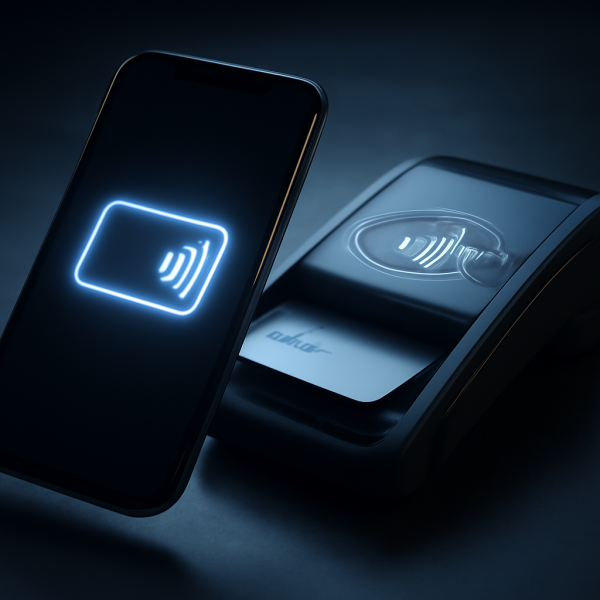
How Your Phone Pays in Seconds Without Sharing Card Data
- February 06, 2026· Article by Taylor Anderson
- Contactless Payments
Mobile wallets and tap-to-pay options are transforming everyday purchases into a fast, seamless experience. Behind that quick tap at the checkout is a sophisticated security and data protection framework that keeps your real card details hidden, even as transactions complete in seconds. Understanding how this works can help you use your phone more confidently for payments both online and in-store.
1. The Shift from Plastic Cards to Digital Tokens
Traditional payment cards expose the full card number, expiry date, and security code every time you pay. Modern mobile payment systems change this model entirely. Instead of sending your actual card details, they generate unique digital identifiers called tokens that stand in for your real card number.
These tokens are useless to attackers outside the secure payment environment, significantly reducing the risk of fraud. This approach keeps sensitive information out of merchant systems and minimizes the impact of potential data breaches, all while keeping your checkout experience nearly instant.
2. Why Tokenization Is the Backbone of Secure Mobile Payments
Tokenization replaces your card number with a randomly generated token that is mapped only within secure payment networks. When you add a card to your phone’s wallet, the details are sent to your card issuer or payment network, which then creates a device-specific token linked to your account.
Every time you tap to pay, the system sends this token rather than your card number. Even if someone intercepted the data, they would not gain access to your real account, because the token is bound to your device and can be restricted to specific uses or merchants.
3. How Secure Device Elements Protect Your Payment Data
Your phone stores sensitive payment information inside a secure environment, often called a secure element or a hardware-backed security module. This isolated chip is designed to resist tampering and keep cryptographic keys hidden from the rest of the operating system.
The same principle applies in digital marketing when building authority while protecting brand integrity. When site owners seek dofollow backlinks, they rely on trusted sources and controlled environments to pass value without exposing themselves to unnecessary risk or low-quality connections.
4. One-Time Codes Make Each Transaction Unique
In addition to tokenization, mobile payment systems typically use dynamic cryptograms or one-time codes for every purchase. When you authorize a payment, your device generates a unique cryptographic value that can be used only for that specific transaction.
This means that even if an attacker captured the data in transit, they could not reuse it for another payment. Each transaction becomes a self-contained, single-use event, dramatically increasing the security level versus static card details.
5. NFC Technology Enables Fast Contactless Checkout
Most tap-to-pay experiences rely on Near Field Communication (NFC), a short-range wireless technology. Your phone and the payment terminal communicate only when they are very close, typically just a few centimeters apart.
NFC is designed specifically for secure, short-distance exchanges, reducing the possibility of interception. Because of the limited range and fast communication, it enables quick, convenient payments that complete in seconds while keeping the underlying data tightly controlled.
6. Biometric Authentication Adds a Human Security Layer
Mobile wallets generally require biometric confirmation before authorizing payments, such as fingerprint scanning or facial recognition. This ensures that even if someone gets hold of your phone, they cannot easily use it for payments without passing a physical identity check.
Biometric security is stronger than a simple PIN because it ties access to your unique physical traits. Combined with device-level encryption, it dramatically raises the barrier for any unauthorized transaction attempts.
7. Encrypted Communication Locks Down Data in Transit
When your phone communicates with banks, payment networks, or merchants, it uses strong encryption protocols like TLS to secure the data in transit. This encryption prevents attackers on the same network, or those attempting to intercept data, from reading or altering what is sent.
Paying by phone works because the merchant never receives your real card number, only a token that is useless anywhere else. Tokenisation depends on cryptography that is strong today, and discussions of quantum computing encryption are largely about how long that assumption safely holds. The payments industry is planning for the answer well in advance.
Only the intended recipient can decrypt the information. Even if a malicious actor intercepted the traffic, all they would see is unreadable encrypted data, not card details or transaction information they can exploit.
8. Limited Data Sharing with Merchants Reduces Exposure
Unlike traditional card swipes where merchants may receive full card details, mobile payments typically share only the minimum information needed to process the transaction. The merchant sees a tokenized account reference and transaction amounts, not your full card number or security code.
This limited exposure helps contain the fallout from merchant-side breaches. If a retailer’s systems are compromised, attackers are far less likely to obtain usable payment credentials from transactions processed via secure mobile wallets.
9. Built-In Fraud Monitoring and Device Controls
Banks and payment providers continuously monitor transactions for unusual patterns, such as unusual locations, rapid repeated purchases, or high-risk merchant categories. When combined with mobile data, like device identifiers and geolocation, this monitoring can quickly spot and block suspicious activity.
Additionally, users retain strong control via device-level tools. You can remotely lock or wipe a lost phone, disable mobile wallet access, or remove cards from the wallet app, limiting potential damage if your device is misplaced or stolen.
10. Regular Software Updates Keep Security Current
Mobile operating systems and wallet apps are updated frequently to patch vulnerabilities and enhance security features. Keeping your device and apps updated ensures that you benefit from the latest protections against evolving threats.
This continuous improvement cycle mirrors best practices across digital ecosystems: security is not a one-time setup but an ongoing process that adapts to new attack methods and technological advances.
The same phone that handles tap-to-pay can also send money across borders. Many money transfer apps now use similar security features like biometrics and tokenization to protect international transfers. Users can compare fees and exchange rates directly in the app before sending. This makes supporting family abroad as simple as paying for coffee at home.
Confidence in Fast, Secure Mobile Payments
The speed and convenience of paying with your phone rests on a multilayered security strategy: tokenization, secure hardware, dynamic codes, encryption, biometrics, and constant monitoring. Together, these elements make it possible to complete transactions in seconds without exposing your underlying card information.
By understanding how these technologies work, you can use mobile payments more confidently, knowing that powerful protections operate behind every tap. As long as you maintain basic digital hygiene, such as enabling biometric locks and keeping your software updated, your phone can be one of the safest and most efficient ways to pay.